

The first step to create effective marketing campaigns, develop products that meet market demands and establish long-lasting relationships with customers is to understand who your target audience is. This is where target audience analysis becomes crucial – an indispensable phase for any successful strategy.
✨ Resuma este artigo com IA
Let’s define first what target audience analysis actually entails and why it’s such a critical component of your business strategy.
Target Audience Analysis: What is It?
Target audience analysis consists of identifying, studying and gaining an in-depth understanding of the specific group of people your brand wants to reach. This procedure involves collecting demographic, behavioral, psychographic and geographic data in order to establish an accurate view of who your ideal consumers are.
Understanding what target audience analysis is, we now need to explore why it’s so important for your business success!

Why is Target Audience Analysis Important?
Target Audience Analysis is crucial because it ensures that your message reaches the right people, in the right way, at the right time. Here are the main reasons why it’s so important:
- Helps create personalized marketing strategies;
- Increases conversion rates and ROI;
- Reduces wasted marketing efforts;
- Strengthens brand communication by speaking directly to audience needs;
- Supports product development based on actual demand.
In short, Target Audience Analysis helps you stop guessing and start connecting. It’s the foundation for more effective marketing, better products, and stronger customer relationships.
Now that we’ve covered the importance of analyzing your target audience, let’s look at some practical examples to see how this works in real business scenarios.

Examples of Target Audience Analysis
- Women’s fashion e-commerce: after an analysis of the public, it is discovered that 70% of customers are urban women aged between 25 and 35 who value sustainable fashion. This guides the campaigns to highlight environmental responsibility and modern style.
- Online education startup: The analysis reveals that the public is mostly made up of young people between the ages of 18 and 24 who are looking for accessible and flexible courses. The strategy is therefore to focus on short-duration content at competitive prices.
- Vegan restaurant: By mapping the public, a strong presence of self-employed professionals can be seen, who are concerned about well-being and conscious eating. This led to the creation of a more functional menu and communication focused on health and ethics.
With these examples in mind, it’s important to understand the different types of audience analysis that inform such strategies.
Types of Audience Analysis
We have three main types of Audience Analysis, they are:
- Demographic Analysis: focuses on age, gender, income, education, etc.
- Psychographic Analysis: involves interests, attitudes, lifestyles, and values.
- Behavioral Analysis: looks at user behaviors such as purchasing habits, brand interactions, and engagement history.
Once you’ve identified the type of analysis that best fits your needs, it’s time to dive deeper into the key aspects that shape your audience’s understanding.
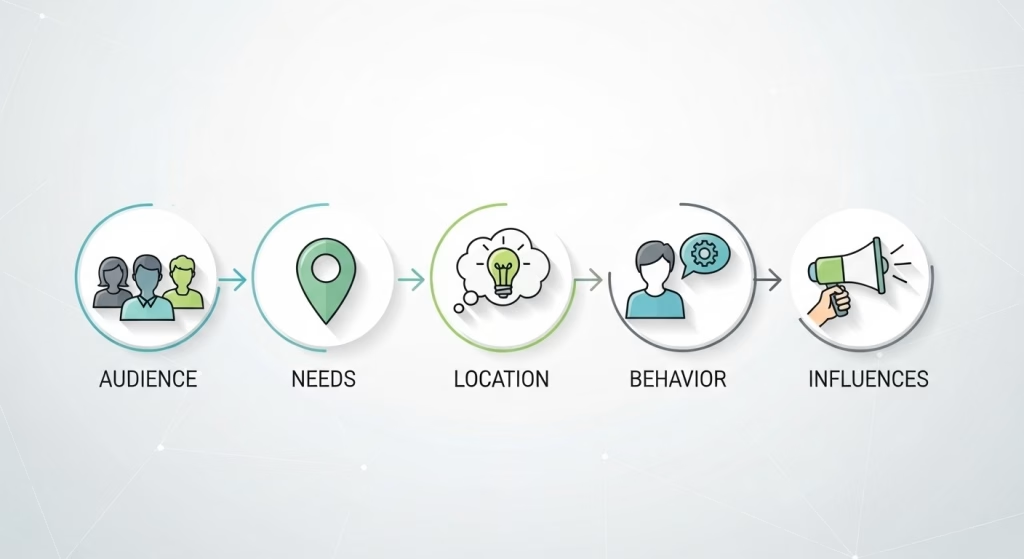
5 Essential Aspects of Audience Analysis
Understanding your audience is paramount to effective communication. Whether you’re crafting a marketing campaign, designing a product, or delivering a presentation, a thorough audience analysis lays the groundwork for success. To do this, ask yourself the following:
- Who is your audience? – Demographic and psychographic profile.
- What are their needs and desires? – What problems does your product solve for them?
- Where are they? – Channels and platforms where your audience consumes content.
- How do they behave? – Do they make quick decisions? Do they research beforehand?
- What influences them? – Friends, influencers, price, values?
Having identified these essential elements, the next step is to learn how to structure and calculate your target audience effectively.
How to Calculate and Structure Your Target Audience
A well-defined target audience is crucial for any successful marketing strategy. Without understanding who you’re trying to reach, your efforts can be scattered and ineffective. Follow these steps to calculate and structure your target audience:
- Collect Data: Use tools like Google Analytics, social media insights, and customer surveys.
- Create Segments: Group people with similar traits or behaviors.
- Develop Personas: Build detailed fictional profiles to humanize each audience segment based on real data.
- Map Customer Journey: Understand how each segment interacts with your brand at every stage.
- Test and Optimize: Use A/B testing and feedback to refine your understanding over time.
- Trend analysis: Identify changes in behavior and in preferences.
Turn Insight Into Action
To get to know your target audience isn’t just a smart business move—it’s essential for creating meaningful connections, optimizing your resources, and driving measurable results. Understanding your audience in depth allows for smarter decisions, greater return on investment and, above all, the construction of more human and connected brands.
From defining who your audience is to identifying their behaviors, needs, and preferences, audience analysis empowers your brand to deliver the right message, to the right people, at the right time. But getting it right takes expertise, the right tools, and a strategic approach.
Need help analyzing your target audience or boosting your marketing performance? Contact Cluster today to elevate your marketing and to transform data into results!
FAQ
What is target audience analysis?
Target audience analysis is the process of identifying, studying, and understanding the specific group of people a brand wants to reach. It involves collecting demographic, behavioral, psychographic, and geographic data to build an accurate profile of ideal consumers.
Why is target audience analysis important for businesses?
It helps create personalized marketing strategies, increases ROI, reduces wasted efforts, strengthens brand communication, and supports product development based on real market demand.
What are the main types of audience analysis?
The three main types are:
– Demographic Analysis: age, gender, income, education.
– Psychographic Analysis: interests, lifestyles, attitudes, and values.
– Behavioral Analysis: purchasing habits, brand interactions, and engagement history.
How can businesses calculate and structure their target audience?
Steps include collecting data through analytics and surveys, segmenting audiences, creating personas, mapping the customer journey, and testing/optimizing through feedback and trend analysis.
What tools can help with target audience analysis?
Popular tools include Google Analytics, social media insights, customer surveys, CRM platforms, and A/B testing software to refine audience understanding and improve marketing effectiveness.